


The Atlas Collection
Travel posters
For places worth remembering. Modern prints inspired by favourite coastlines, towns and landmarks.
New destinations added regularly
Posters from the places you love


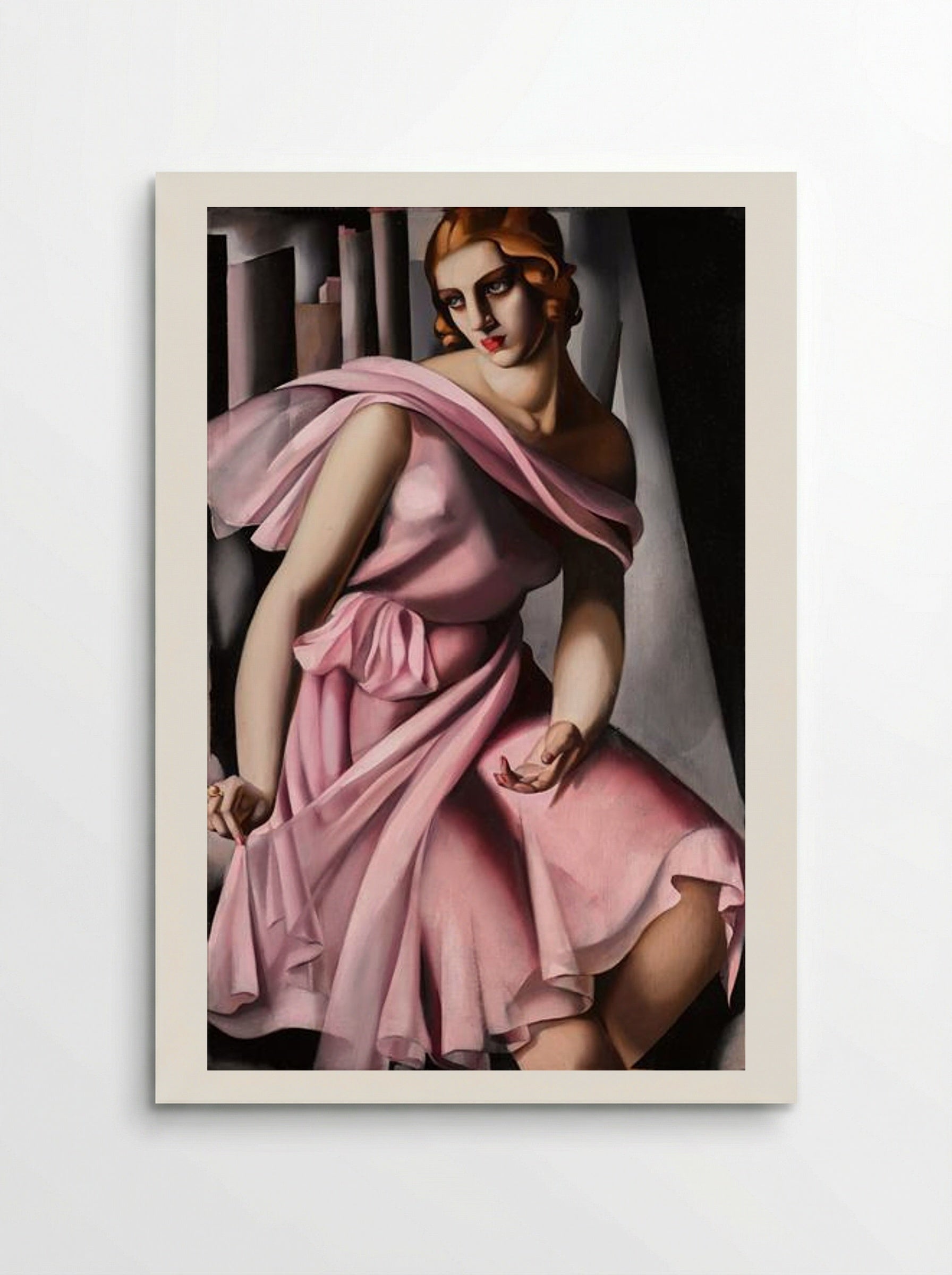
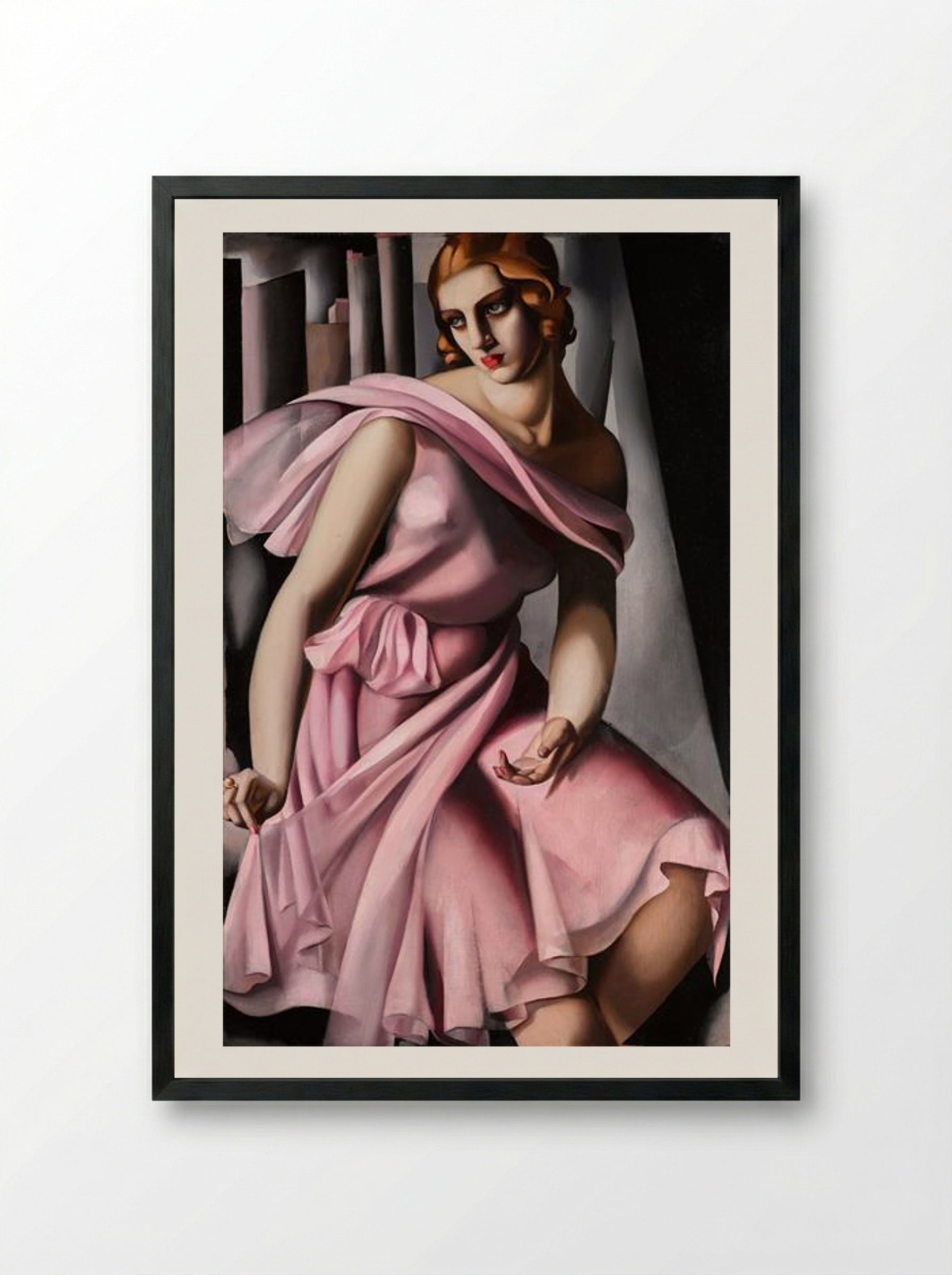
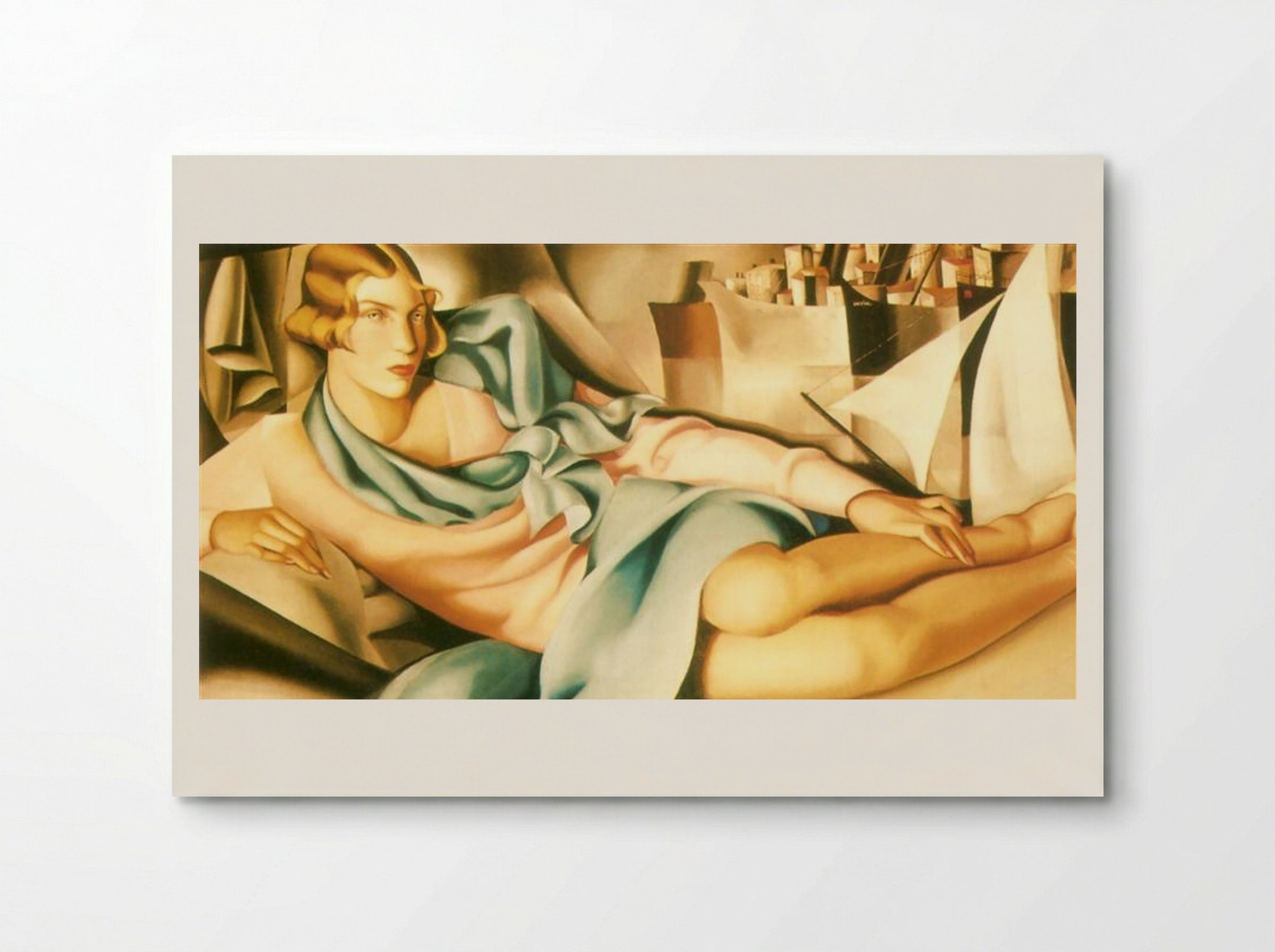


Over 320 curated artists
Browse all artists


Curated by Artists
Museum Quality Prints
Crafted to Last
Designed for Interiors
Style It Your Way
Popular prints available framed or on canvas


Timeless Art For Beautifully Designed Homes
Why Choose Us ?
What customers say
Over 5000
Happy Art Lovers


From Our Journal


Salomon Painted 769 Gouaches Before Being Sent to Auschwitz at Twenty-Six
Charlotte Salomon was born in Berlin in 1917 to a wealthy Jewish family. Her mother, Franziska, killed herself when Charlotte was nine, by jumping from a window. Charlotte was told that her mother had died of influenza. The truth about the suicide, and about the long history of suicides in the maternal line of Charlotte's family, was kept from her until she was twenty-three. She was then told everything in a single afternoon by her grandfather, who was about to commit suicide himself. Between 1940 and 1942, in the small French Mediterranean town of Villefranche-sur-Mer where she had fled with her grandparents, Salomon painted 769 gouaches on individual sheets of paper. The gouaches were numbered, arranged into a sequence, and given titles. The whole work, which Salomon called Leben? oder Theater? (Life? or Theatre?), tells the story of her life and family up to the moment of her grandfather's revelation. She finished it in the spring of 1942. She gave the work to a French doctor for safekeeping. She was deported to Auschwitz in October 1943 and killed on arrival. She was twenty-six and five months pregnant. Berlin Salomon's father, Albert, was a surgeon and a respected academic in Berlin. After the death of his first wife, he married a singer named Paula Lindberg. Paula effectively became Charlotte's mother and stepmother, and Charlotte's relationship with her was both close and competitive. Charlotte attended the Vereinigte Staatsschulen, the Berlin united state art schools, from 1936 to 1938. She was the only Jewish student admitted in 1936, and she was admitted only by an administrative oversight: her application had not been flagged as Jewish, and by the time the school realised, she had already enrolled. She studied painting and won the school's prize for best student in 1938. She was barred from accepting the prize in person because of her race. By 1938 the family situation in Berlin had become impossible. Charlotte's grandparents had fled to the south of France in 1933. After Kristallnacht (November 1938), Albert and Paula sent Charlotte to join her grandparents in the south of France. She left Berlin on 1 January 1939 and never saw her father or stepmother again. Both survived the war; both returned to Berlin afterwards. The Suicides The history that Charlotte's grandfather revealed to her in 1940 was as follows. Her mother Franziska had committed suicide in 1926. Her aunt Charlotte (Charlotte's namesake) had committed suicide in 1913. Her grandmother had attempted suicide several times. Several other women in the family across three generations had killed themselves. The pattern was being kept secret from Charlotte because the family worried she would conclude that the same fate awaited her. The grandfather told her the whole history because he had decided to kill himself. He had become depressed in the south of France, was certain the Nazis would eventually reach Villefranche, and could not bear waiting. He intended to die that evening. He wanted Charlotte to understand the family she came from. The grandfather did kill himself that night. Charlotte spent the next eighteen months in the south of France, with her grandmother (who soon died of cancer) and increasingly alone. The whole of Leben? oder Theater? was conceived and painted in this period. What She Painted The work is 769 individual gouache sheets, approximately 32 by 25 centimetres each, painted in tempera. They are numbered in pencil at the top right. They are designed to be read in sequence: as a kind of graphic novel before graphic novels existed, or a film told entirely in painted frames. The narrative tells the story of Salomon's family from the late nineteenth century onward, focused on the women: the suicides, the marriages, the relocations, the secrets. Salomon used fictional names for everyone, but the figures are recognisable. Her mother is called Franziska. Her stepmother is called Paulinka. The grandfather is called Daberlohn (a play on "Tagelöhner," day-labourer). Charlotte herself is called Charlotte Kann. The technique is unusual. Salomon used a limited palette: yellow, red, blue, black, white, with small variations. The figures are simplified, almost cartoonish, but the compositions are sophisticated. The earlier sheets show single scenes; the later sheets layer multiple scenes onto a single sheet, with text written across them and figures repeating across the surface. The whole work moves from a relatively conventional narrative style at the beginning to an increasingly fluid, almost cinematic visual language by the end. Salomon wrote text directly onto the gouaches: descriptions, dialogue, musical references (she indicated specific songs from operas, popular music, and German lieder that she wanted to accompany the reading of each section). The intended experience of the work is multi-sensory: image, text, and music all simultaneously. Charlotte Salomon, photograph, c. 1939–40. Joods Historisch Museum, Amsterdam. The End Salomon married Alexander Nagler, a refugee from Vienna, in June 1943. The couple were living in Nice. By this point southern France had been occupied by Nazi Germany, and the round-up of Jews was systematic. On 24 September 1943, Salomon and Nagler were arrested by the Gestapo at their home. They were transferred first to Drancy, the holding camp outside Paris, and then deported to Auschwitz on 7 October 1943. Charlotte Salomon was killed in the gas chamber on arrival at Auschwitz on 10 October 1943. She was twenty-six and five months pregnant. Alexander Nagler was killed in Auschwitz on 1 January 1944. What Survived Before the arrest, Salomon had given the complete Leben? oder Theater? to the French doctor Georges Moridis, who had been treating her family in Villefranche. She told him, "This is my whole life." He kept the work hidden through the rest of the war. After the liberation, Moridis returned the work to Salomon's father Albert, who had survived in Amsterdam. Albert and his wife eventually donated the entire 769-sheet work, plus Salomon's letters and surviving smaller drawings, to the Joods Historisch Museum (Jewish Historical Museum) in Amsterdam in 1971. The work has been held there since. What Took So Long Salomon's work was not widely known until the 1960s. The first major publication was a 1962 selection in a German art journal. The first full exhibition (with all 769 sheets shown together) was at the Joods Historisch Museum in 1981. The work has slowly entered the canon since. The reception has been complicated by two questions. The first is whether Salomon's grandfather assaulted her sexually before his death; a 1990 letter from Salomon, written in 1943, claims that he did. The letter was kept private by the family for decades and was published only in 2015. The second question is what to make of Salomon's work as a Holocaust testimony: she completed it before her deportation, before the full scale of the Final Solution was clear, and the work does not address the Holocaust directly. It is a record of a German Jewish family's pre-Holocaust history, made by a woman about to be killed by the Holocaust. The 2017 Royal Academy exhibition Charlotte Salomon: Life? or Theatre? (London) was the largest international showing of the work. The 2023 Centre Pompidou-Metz retrospective, which combined the gouaches with photographic and archival material, brought new audiences. Salomon is now considered one of the central figures in the early-twentieth-century narrative tradition that anticipates the modern graphic novel. What the Work Argues The title Leben? oder Theater? is a question. Is what Salomon shows life, or is it theatre? Both, the work suggests. The family history is true; the way she has rendered it (with theatrical staging, song cues, cinematic framing) is invented. The truth of the work is in the structure she has imposed on the chaos: the decision to look at her own family's pattern of suicide and ask what it meant for her own future. The 769 sheets are an attempt by a twenty-three-year-old painter to understand her own life by painting it. The painter died at twenty-six. The work continues. The Joods Historisch Museum in Amsterdam allows visitors to examine the sheets one by one, in the sequence Salomon numbered them. The whole work takes approximately three hours to read.

Kusama Has Lived in a Tokyo Psychiatric Hospital by Choice for Fifty Years
In 1977, Yayoi Kusama, then forty-eight, checked herself voluntarily into the Seiwa Hospital for the Mentally Ill in the Shinjuku ward of Tokyo. She had returned to Japan from New York four years earlier, exhausted, in debt, and suffering from the same hallucinations and obsessive thoughts that had been part of her life since she was about ten years old. The hospital admitted her as an outpatient with the option to remain in residence for as long as she found it helpful. She found it helpful. She has remained in residence since. Her studio is across the street from the hospital. She walks to it most mornings. She has produced, since 1977, hundreds of paintings, large-scale installations, a series of Infinity Mirror Rooms that have travelled to most major museums in the world, several novels, an autobiography, and a flagship gallery installation at the Whitney Museum that broke the Whitney's attendance records when it travelled to New York in 2021. She is, by sales figures, the highest-earning living woman artist in the world. Matsumoto Kusama was born in 1929 in Matsumoto, a small city in central Japan. Her family ran a wholesale seedling and plant nursery, and her childhood was financially comfortable. It was not emotionally stable. Her mother was abusive toward her. Her father was repeatedly unfaithful and frequently absent. Kusama's mother used her, from about the age of five, as a kind of spy on the father's affairs. The hallucinations began when she was about ten. She would later describe seeing the surfaces of objects around her dissolve into patterns of small dots, or into nets of intersecting lines. The dots would expand and consume the room. The nets would surround her body. She would lose track of where she ended and the room began. The experience was frightening but also visually intense. She began drawing the patterns. The early drawings (preserved in her foundation's archive in Matsumoto) are obsessive accumulations of small marks: dots, circles, and intersecting curves filling entire sheets of paper, with the drawn figure half-emerging from the pattern. The drawings were her way of containing the hallucinations by giving them an external form. Tokyo and Then New York Kusama trained at the Kyoto Municipal School of Arts and Crafts in the late 1940s, studied traditional Japanese nihonga painting, and exhibited her first works in Tokyo in the early 1950s. The Japanese art world of the period was deeply conservative, dominated by an elder establishment with no interest in the kind of obsessive abstract drawing she was making. She decided to leave. She wrote, in 1955, to Georgia O'Keeffe, sending her several drawings and asking for advice. O'Keeffe, then in her late sixties and living in New Mexico, wrote back: she encouraged Kusama to come to America. In 1957, Kusama arrived in Seattle. By 1958 she was in New York, in a Lower Manhattan loft, painting the first of the Infinity Net series. The Infinity Nets were large white-on-white canvases covered with thousands of small painted curved marks. Each canvas might have 50,000 individual brush-strokes. Kusama painted them in sessions of fifteen to eighteen hours, without breaks. Several of the canvases were eight or nine metres across. Critics in New York noticed. By 1961, Kusama was exhibiting alongside Donald Judd and Frank Stella. By 1963, she was producing Accumulation sculptures (everyday objects covered in stuffed-fabric protrusions) and the first of the mirror-and-light environments that would become her signature. Yayoi Kusama, The Obliteration Room (installation view). Visitors over the course of the installation cover the all-white room with thousands of coloured stickers, gradually obliterating its surfaces — the principle Kusama has been working with for sixty years. The Sixties Kusama spent the 1960s in New York at the centre of an avant-garde scene that included Andy Warhol, Donald Judd, Carl Andre, Eva Hesse, and Joseph Cornell. She had relationships with several of them: a long platonic friendship with Cornell, a romantic relationship with a sculptor whose name she has not publicly disclosed. She organised what she called Happenings: nude performances in public places (Wall Street, Central Park, the Sculpture Garden of the Museum of Modern Art) where performers covered their bodies and the surrounding objects with painted polka dots. The performances were political (anti-Vietnam, anti-capitalist, sexually liberationist) and produced large quantities of photo and film documentation. The Happenings made her famous in New York and disreputable in Japan. The Japanese press covered the New York performances with shock and disgust. Her family in Matsumoto stopped speaking to her. She had become, in the eyes of conservative 1960s Japan, a national embarrassment. The Collapse By 1973 the pace of work and the New York scene had broken her. The hallucinations had returned in force. She was deep in debt. She had been hospitalised several times in the late 1960s after suicide attempts. She made the decision to return to Japan. The return to Japan was difficult. She was nearly fifty, with no money, no Japanese reputation, and a family that did not want to acknowledge her. She lived in a small flat in Tokyo and tried to write. She produced several novels during this period: deeply obsessive, hallucinatory, and largely ignored by the Japanese literary establishment. In 1977, she checked herself into Seiwa Hospital. The decision was practical: the hospital provided structure, medical supervision, and physical safety. It was also chosen with care. The hospital allowed her to leave during the day to work in a studio. It would not require her to give up her practice. She negotiated the terms of her residence carefully. The Studio Across the Street The studio across the street from the hospital became, over the next four decades, the engine of her late career. She would walk to it every morning at around 9 a.m., work until late afternoon, and return to the hospital for the evening. The schedule has continued, more or less unchanged, for nearly fifty years. The work produced in this period is what built her international reputation. The Infinity Mirror Rooms (which she had begun in New York in 1965 but developed extensively from the 1980s onward) became her signature: small enclosed spaces lined with mirrors, with LED lights or small painted objects inside, creating the impression of an infinite extension of pattern. The room asks the viewer to step inside and stand in the centre. The pattern obliterates the boundaries of the room and the viewer's sense of where they are. The Mirror Rooms map, in physical form, the experience Kusama has had for nearly her entire life. The hallucinations she has fought since she was ten have been turned, over six decades of work, into rooms that other people can step into and feel some version of what she has felt. The art works, in part, because the maker is showing the audience something she has direct access to. The Recognition The international rediscovery began in earnest in the early 1990s. A series of museum exhibitions (the Museum of Modern Art in 1989, the Venice Biennale in 1993, the Los Angeles County Museum of Art in 1998) made the case for Kusama as a foundational figure in postwar art. The 2012 retrospective at Tate Modern brought her to wide European notice. The 2017 Hirshhorn Museum show in Washington broke attendance records. The 2021 New York Botanical Garden installation and the 2022 Tate Modern Infinity Mirror Rooms exhibition together became the most-visited contemporary art events of their years. Kusama, at ninety-three, was the highest-earning living woman artist by sales figure. What the Hospital Allows The decision to live in a psychiatric hospital is unusual for a public figure of Kusama's prominence. Her case is unusual: she has the resources to live anywhere in the world, but she has chosen the hospital because it provides what she needs for the work to continue. The hospital offers continuity. It offers medical supervision when the hallucinations are severe. It offers a routine that does not change with international demand for her work. It removes from her daily life the pressures (social, financial, logistical) that contributed to her collapse in the 1970s. The studio across the street is the only place that needs her. Kusama is in her mid-nineties. She continues to work. The exhibitions continue. The hospital and the studio are still where her days happen. The hallucinations are still there. The polka dots that began at ten are still being painted.

Turner Painted a Red Buoy on Top of Constable's Picture Hours Before the RA Opened
The Royal Academy in early nineteenth-century London held its annual exhibition for two months every summer. The paintings were hung in the Great Room at Somerset House, then later at the new Trafalgar Square building from 1837. In the three days before the exhibition opened, members of the Academy were allowed to come in and varnish their pictures: clean off the dust, freshen the colours, and (in practice) make last-minute revisions to the work itself. These were the Varnishing Days, and they were where the public reputation of British landscape painting was decided. On Varnishing Day in 1832, John Constable was at the Academy working on The Opening of Waterloo Bridge from Whitehall Stairs, a painting he had spent the previous decade preparing. His picture was 130 by 218 centimetres, a riot of crimson barge cloths, gold ceremonial uniforms, and white sky over the Thames. Hung directly next to it, on the same line, was J.M.W. Turner's Helvoetsluys, a grey seascape of Dutch warships in a calm sea. The Buoy The story is recorded in C. R. Leslie's Memoirs of the Life of John Constable, published in 1843, six years after Constable's death. Leslie was at the Academy that morning and saw what happened. Turner came in late, looked at the two paintings hanging side by side, walked back to the storage room, and returned with his palette and a brush. He stood in front of Helvoetsluys for several minutes without speaking. Then he loaded a brush with red lead, walked up to his own painting, and applied a single bright red dab to the centre of the grey sea. He stepped back, looked at the result, picked up his palette, and walked out without speaking to anyone. The red dab read as a buoy. Against Turner's grey palette, it was almost violently visible. Hung next to Constable's red-and-gold spectacle, the buoy now pulled the eye of any visitor walking through the room directly into Turner's painting first. The crimson barges in Constable's picture, the centrepiece of his composition, became visual support for Turner's one dab of paint. Constable returned shortly after. He looked at what Turner had done, and said: "He has been here, and fired a gun." What Turner Did Next The story has a coda that is often left out. Turner returned to the Academy on the morning of the public opening, two days later, with a single sable brush. He worked on the dab for about a minute. Leslie describes him "passing the brush again over the spot, lightly and tentatively, as if shaping it." When he stepped back, the dab had been worked into the form of a small painted buoy, with rope and waterline visible. Leslie's account ends there. Turner did not explain. He never publicly discussed the incident. The painting Helvoetsluys hangs today in the Tokyo Fuji Art Museum, and the buoy is still there in the centre of the grey sea. J.M.W. Turner, The Fighting Temeraire, 1839. National Gallery, London. Turner painted ships in their final voyages; the Temeraire is being towed to the breakers in the painting many British viewers still consider his masterpiece. What Was at Stake Constable and Turner were almost exact contemporaries. Constable was born in 1776, Turner in 1775. Both had been admitted to the Royal Academy schools as young men. Both had spent their working lives painting British landscape. Both had, by 1832, become the two living British painters who would define what landscape painting could be for the rest of the century. Their reputations had developed differently. Turner had been a child prodigy. He was admitted to the Academy schools at fourteen, exhibited at the Royal Academy from the age of fifteen, was elected an Associate at the youngest possible age, and was a full Academician by twenty-six. By 1832, he had been a Royal Academician for thirty years. Constable had had a slower career. He was not admitted as an Associate until 1819, when he was forty-three. He became a full Academician only in 1829, in his fifty-third year, and only by a single vote. The Hay Wain (1821), now considered his most famous painting, had hung at the Royal Academy in 1821 to faint praise and had failed to sell. It was eventually bought by a French dealer for the equivalent of £250 and shown at the 1824 Paris Salon, where it won a gold medal and influenced Delacroix. What the Painters Were Doing By 1832, the two painters had been moving in opposite stylistic directions for a decade. Constable was committed to the close observation of specific places: the Stour Valley in Suffolk where he had grown up, the area around Hampstead Heath where he lived in his later years, the cathedral at Salisbury. His paintings were built from extensive plein-air sketches and developed at the easel over months. The Hay Wain shows a specific stretch of the River Stour at a specific moment, with weather and light correct for that moment. Turner was moving toward an art of atmospheric effect divorced from any specific location. His paintings of the 1820s and 1830s show ships, harbours, and landscapes that are increasingly subordinated to the effects of light and weather. By the 1840s, the late watercolours and oils would dissolve almost entirely into colour, with the subject becoming a kind of armature for the chromatic event. The Varnishing Day buoy was a comment on this difference. Constable's painting had been built from specific observation; Turner's grey sea was a more abstracted vision. The single dab of red was Turner saying, in effect: my painting can absorb a single intervention and remain itself. Constable's painting could not survive a similar intervention. The two approaches were not equivalent. The Long Quarrel The buoy was not the only flashpoint between them. The two painters had circled each other for years. Constable had voted against Turner's election to several Academy committees. Turner had made disparaging remarks about Constable's painting in conversation. Both knew the other was a serious rival, and both treated the other with the careful hostility of equals. The buoy story has survived, while most of the other flashpoints have been forgotten, because the buoy captures something specific about the difference between them. Turner could not paint Constable's kind of picture, and Constable could not paint Turner's. The buoy was a moment in which Turner deliberately stepped onto Constable's territory and demonstrated that, on Constable's own wall, Turner's grey could win. What Survived The Opening of Waterloo Bridge hangs in the Tate Britain. Helvoetsluys hangs in Tokyo. The Hay Wain is in the National Gallery. The Fighting Temeraire is in the same building. Constable died in 1837, aged sixty, of indigestion. Turner died in 1851, aged seventy-six, in a Chelsea cottage where he had been living under an assumed name. Both bequeathed substantial bodies of work to the nation. The Constable estate produced the holdings now spread between the Victoria and Albert Museum and the National Gallery. The Turner bequest, larger and more contentious, eventually produced the Clore Gallery at Tate Britain and the Turner Prize. The buoy is still on Helvoetsluys. It is approximately one centimetre across. The painting around it is now nearly two hundred years old, and the red has darkened slightly, but the dab is still visible from across the room. It is the smallest piece of paint in British art that has ever done more work.